
Light pollution is growing — Grand Junction isn’t immune.
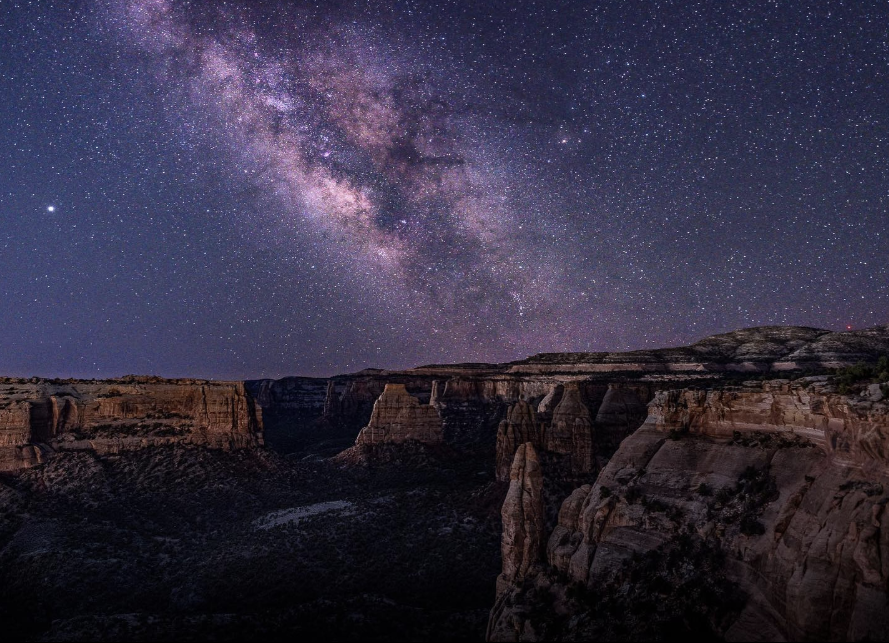
Not long ago, the Milky Way stretched across the Grand Valley’s night sky.
Today, it’s much harder to see from your backyard — not because the stars are gone, but because excessive, poorly-aimed artificial light is washing them out.
What is light pollution?
Light pollution is excessive, poorly-aimed artificial light that wastes energy and money, hides stars, and harms wildlife. It creates the orange glow you see above the city on a cloudy night — a glow that today can be seen from as far away as Moab.
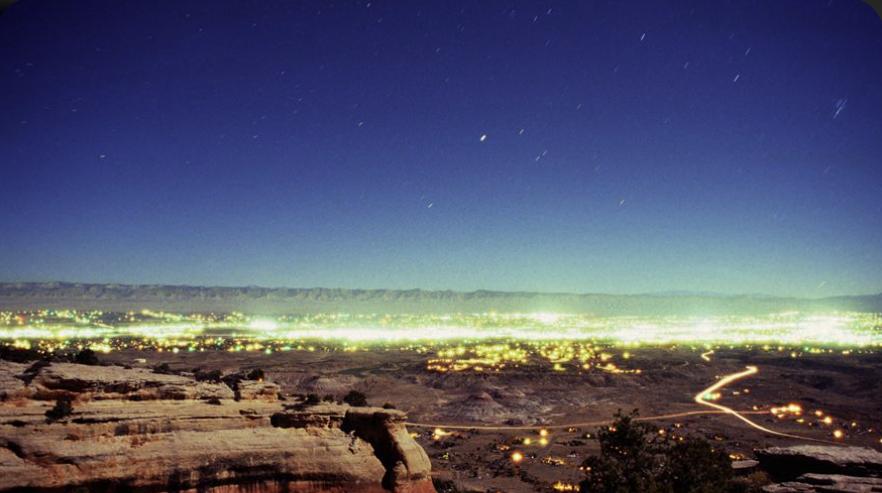
There are three main types of light pollution:
Skyglow
Brightening of the night sky over inhabited areas
Light trespass
Light falling where it is not intended or needed
Glare
Excessive brightness that causes visual discomfort
Why it matters here
Grand Junction is surrounded by some of the most remarkable dark sky territory in the American West. Colorado National Monument sits on our doorstep. Arches, Canyonlands, and Black Canyon of the Gunnison — all certified International Dark Sky Parks — are less than two hours away. Highline Lake and Sweetwater Lake state parks are nearing Dark Sky certification.
That context matters. A Grand Valley that takes light pollution seriously becomes the basecamp for a growing dark sky corridor — good for tourism, for the local economy, and for everyone who wants to see the stars.
The city and Mesa County have made progress reducing light pollution. But more needs to be done. Modernizing local policies, engaging officials and businesses, and building community awareness — that’s what DarkSky GJ is here for. And you can help.
The good news
Light pollution affects all of us. Fortunately, concern about light pollution is rising dramatically, and unlike many other forms of pollution, it is reversible.
Each one of us can make a difference! Just being aware that light pollution is a problem is not enough — join DarkSky Grand Junction to take action.